
Peeking into the kitchen after dinner, I would see my mother with 1000 Word Dictionary in one hand, and a thin cane in the other. My sister seated next to her, nervous, legs dangling. My mother would pick a spelling word at random.
For every word misspelled, my sister would be hit sharply on the hand. It is from her experience that I learnt to read 1000 Word Dictionary over and over, making sure that when my turn came, I would not be hit.
It is also my mother who first brought me to the library. Library visits soon became a weekly affair, with my sister and I quickly exhausting the borrowing limit of 4 books per person. We were undiscerning, first devouring fairy tales and moving quickly into fantasy, mystery and science fiction.

It was then that I discovered the Replica series by Marilyn Kaye. Cloning and conspiracy were themes that captured my imagination, and I admired the protagonist: She was a female clone who struggled to live a normal life. Unlike other superheroes, she wasn't overtly different or unusual; she simply had enhanced abilities, which she used to her advantage. I loved the story's believability.
I would eventually become drawn to a specific type of science fiction – not the purists, like the Dune series, but what I imagine as soft sci-fi: science fiction that fell into the grey area of plausibility; that explored the dark relationships between technology and imaginary societies. I couldn't care less about scientific accuracy; I was far more concerned about exploring the human condition.


I loved Ray Bradbury best. His short stories were always potently written; his language was quiet and simple, his words fired with chilling impact. The Martian Chronicles was a constant favourite of mine; I would frequently revisit specific stories, feeling both haunted and amazed.
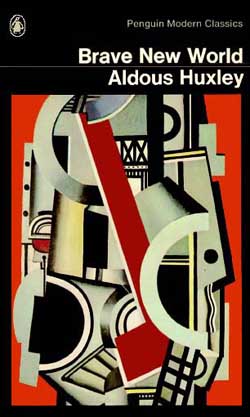
Aldous Huxley's Brave New World actually put me in a mild depression for a week – I felt so tormented by the ugliness of humanity in it, and carried its truth like a burden.
It was then that I developed my awareness of the importance of literature. It is literature's dystopias that provide us with a visage of an unwanted future; whose insistent warnings remind humanity to walk in the light.
In response to the amazing science fiction I was reading, I felt inspired to write my own science fiction. Here is the cover of a comic book I wrote and illustrated, which told the classic tale of technology gone wrong, quite Frankenstein-esque on hindsight. By all standards it was extremely poorly written and is the bastard child of my youth.

It was only in my twenties that I felt genuine affection towards poetry. Perhaps the appreciation of poetry required a certain maturity of mind; a certain willingness to construct around the abstract that I did not previously have.

I discovered experimental books like Christian Bok's Eunoia: a lovely collection of poetry dedicated to each vowel. When read aloud, each poem produces such strange sounds!

Nets by Jen Bervin is another favourite of mine: it is created by extracting words from Shakespeare's sonnets. Her act of elimination draws intimacy from such intimidating content. I was so excited that literature could be created from other literature. Another excellent, albeit difficult to read book, is Jonathan Safran Froer's Tree of Codes, extracted from Bruno Schultz's Street of Crocodiles. True to its name, it's haunting and mysterious, the redaction of words transforming poetry to prose.


I'm excited to see where my reading and writing will take me. One never has quite enough time to read everything of interest!

Hi Jia Ying, your reading seems very much intertwined with your writing too - an act of creation necessitated by the reading done. Hope to see more of your writing sometime. Thanks for all the pictures that give a real look into your reading life!
ReplyDelete